
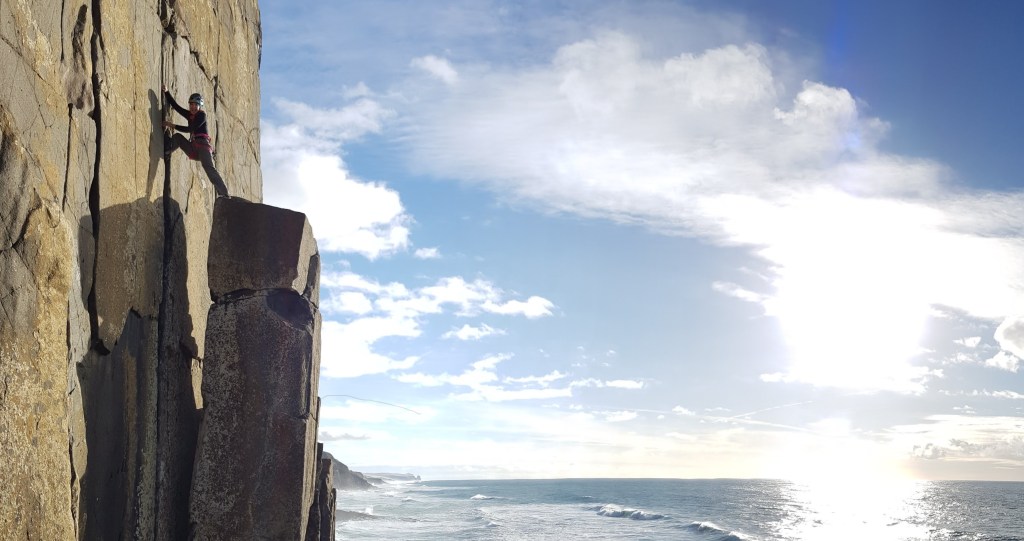
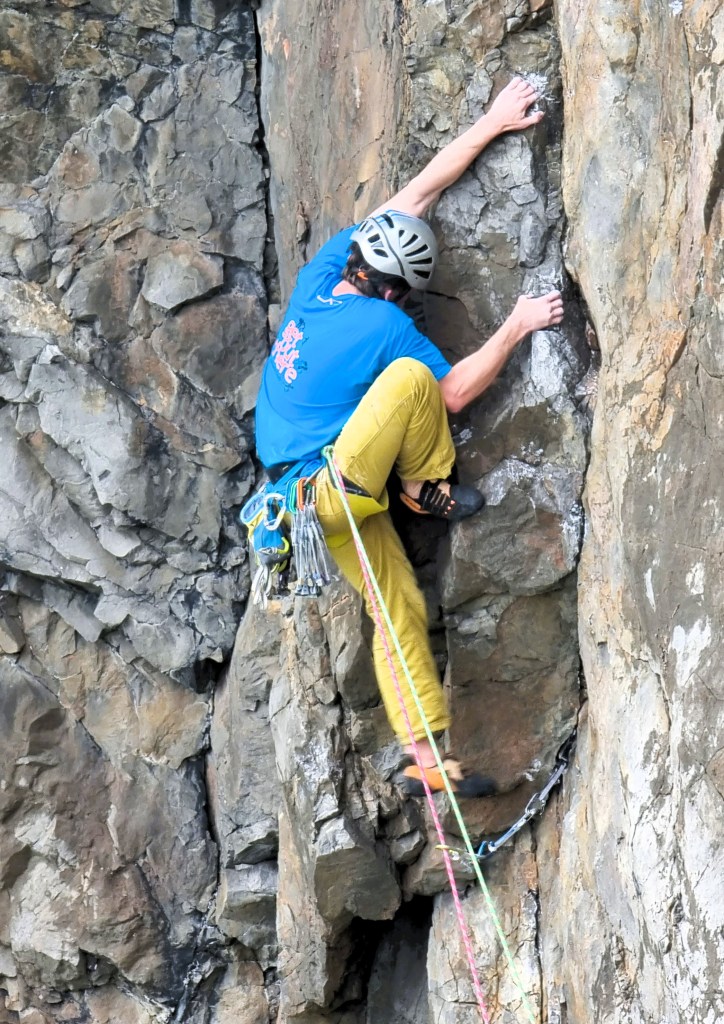
High steps. Wide bridging. Toe jamming in cracks. Awkward moves under bulges and overhangs. All these movements are more accessible to you if can move your hips freely.
In my experience teaching yoga to climbers, lack of hip flexibility is one of the most common reasons climbers want to give yoga a try.
We can’t all have hips like Margo Hayes. But this article suggests ways yoga can help improve hip flexibility – in all directions of movement. You might choose to try the full set of poses for all-round hip flexibility, or just focus on addressing specific muscle groups that you feel are restricting your climbing.
About the Hip Joints
The hip joints are one of two pairs of ball-and-socket joints in the human body (the other pair being the shoulders). They are formed by ball-like head of the femur (thigh bone) inserting into a socket called the acetabulum in the pelvic girdle.
The ball-and-socket structure of the joint means that the thigh can move in many different ways – forwards, backwards, inwards, outwards, external rotation, internal rotation, and round in a circle.
These movements are activated (or constrained) by around 20 different muscles, including the hamstrings. Tightness in one or more of these muscles is a common cause of inflexibility in the hips, restricting movement in one or more different directions.
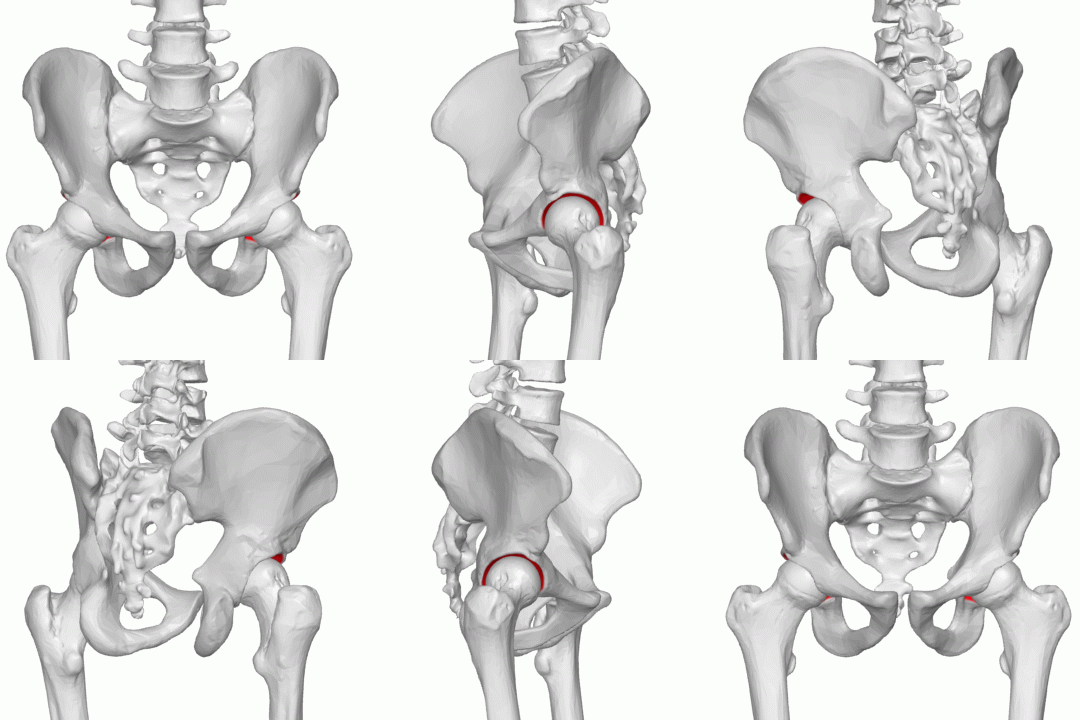
The muscles of the hip grouped by function – see more…
Flexors:
– Psoas Major
– Psoas Minor
– Iliacus
– Pectineus
– Rectus Femoris
Extensors:
– Gluteus Maximus
– Semitendinosus
– Semimembranosus
– Biceps Femoris (long head)
Adductors:
– Adductor Magnus
– Adductor Longus
– Adductor Brevis
– Gracilis
– Pectineus
Abductors:
– Gluteus Medius
– Tensor Fascia Latae
Internal Rotators:
– Tensor Fascia Latae
– Gluteus Minimus
External Rotators:
– Gluteus Maximus
– Gemellus Superior
– Gemellus Inferior
– Obturator Externus
– Obturator Internus
– Quadratus Femoris
– Piriformis
Yoga and Hip Flexibility
Are you sitting comfortably? Many classic yoga poses specifically target hip flexibility – and the reason dates back to the origins of yoga in India.
Asana, the physical practice we now think of as ‘yoga’, was traditionally just part of the ancient philosophy of Yoga.
The intention of asana practice was to enable yogis to sit comfortably for long periods to meditate. In fact the word asana originally meant ‘seat’ (though nowadays it tends to be translated as ‘pose’).
Two of the oldest documented poses in yoga (around 1200 CE) are Siddhasana (Accomplished Pose) and Padmasana (Lotus Pose).
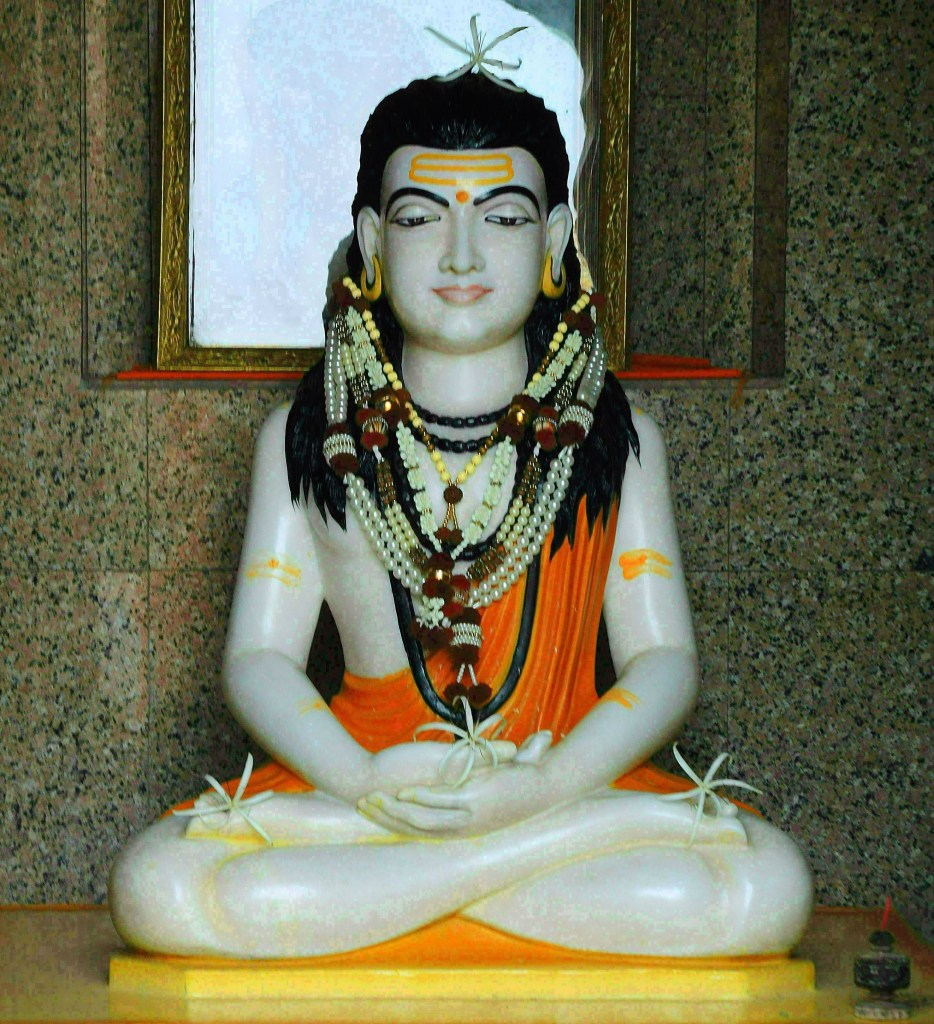
Statue of 11th century yogi Gorkahshanath in Lotus Pose Padmasana. CC BY-SA 4.0, https://commons.wikimedia.org/w/index.php?curid=41305425
Before you start
If you’re new to yoga or to developmental stretching, visit my Yoga Basics – Effective Stretching page for guidance on how to make stretches work for you, then come back to this page to discover some of the most effective poses for hip flexibility.
If you’re already familiar with effective stretching techniques, the table below gives you a quick reminder of the dos and don’ts.
| ✅ Do | ❌ Don’t |
|---|---|
| Warm-up with gentle aerobic exercise and mobilise your joints before moving into deeper stretches. See poses 1 and 2 below for examples. Use your breathing to time your stretch. 5 or 6 slow steady breaths usually take around 30-45 seconds. You can also use breathing to guide you in deepening your stretch – see examples below. Where appropriate, engage antagonistic muscles to help release the muscle you want to stretch. Stretch each muscle group several times in a session – but you can mix it up by choosing different poses each time1. Stretch frequently – at least 2-3 times a week, or every day for fastest gains | Don’t do long stretches (>60s) immediately before climbing session, as this can temporarily reduce muscle strength2. For a yoga warm-up, try a gentle flow sequence or some sun salutations. Don’t be tempted to stretch too far. Aim for the point of ‘sweet discomfort’, where you feel gentle tension, not pain. If the pull of gravity is deepening a pose too far, use props to support you at that sweet spot. Don’t give up! It’s taken months or years for your muscles to get this tight, so don’t expect dramatic results within just a few sessions. Flexibility progresses millimetre by millimetre, but if you persist, you’ll get there. |
⚠The suggestions given here are not a substitute for medical advice.
If you have a problem with inflexibility or pain in your hips, always seek advice from a qualified health professional such as your family doctor or a physiotherapist about which forms of exercise are suitable for your condition.
If any of the following poses cause pain, discomfort, or ‘just don’t feel right’, move out of the pose immediately. Consider trying an easier variation, or if needed, seek face-to-face advice on how to make the pose accessible.
Getting Moving – mobilising the hip
Incorporate these two movements of the hip into the mobilisation phase of your practice, to prepare your hip for deeper stretches.
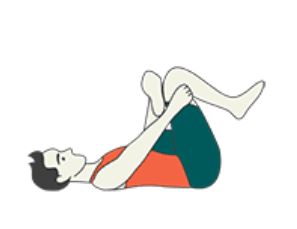
Hip Circles
Pavanmuktasana variation
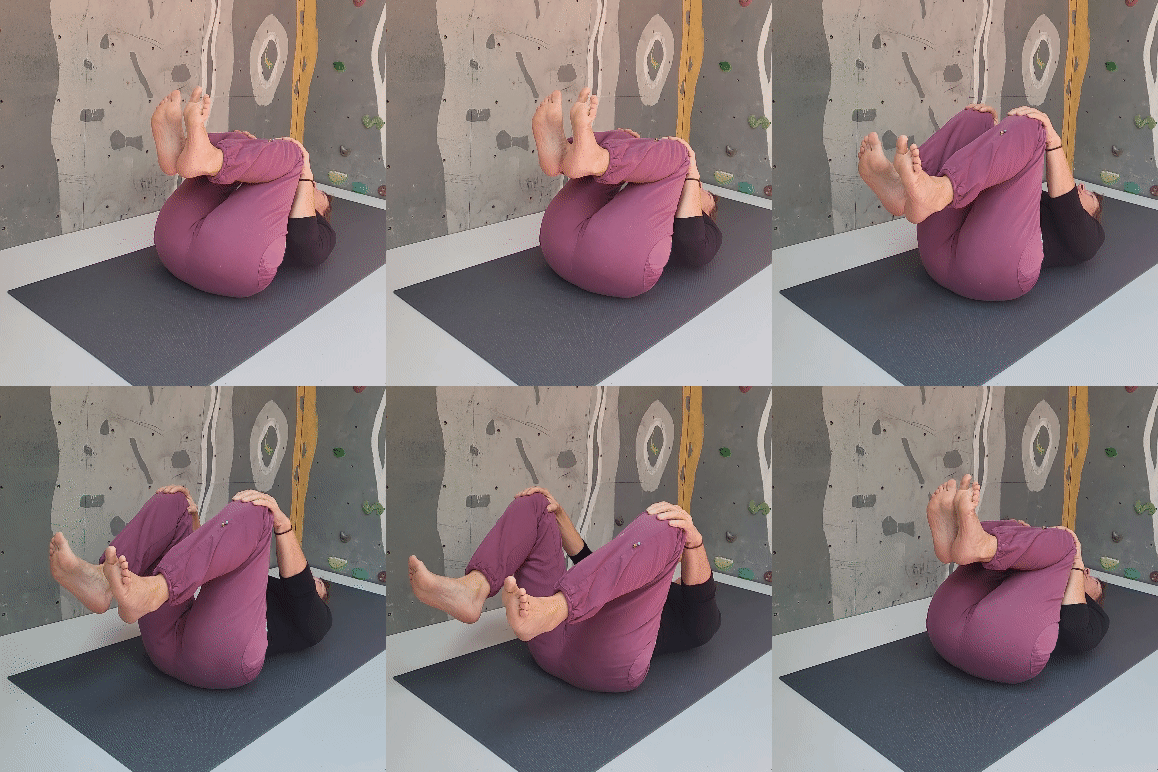
Bring knees towards chest and circle in opposite directions. Breathe steadily as you explore the range of motion in each hip. 8-10 circles each way.
Windscreen Wiper Twist
Supta Parivrtta variation
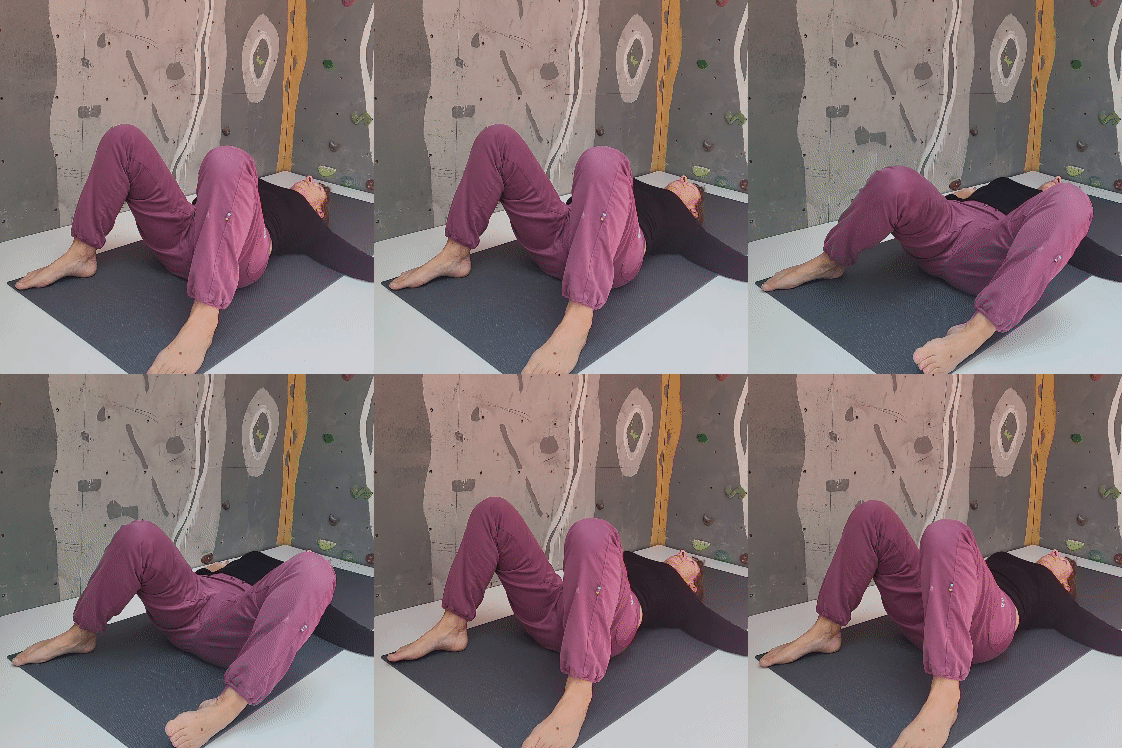
With knees raised and feet mat-width apart, allow the knees to flop from side-to-side like a pair of windscreen wipers. Movements can be very small, or quite large with knees coming close to the mat.
Stepping High – poses for flexing hips
The ability to flex at the hip (bringing the knee close to the chest) is critical to using high footholds. The more flexible your hips, the more precisely you can place your foot and the more powerfully you can push up from the foothold.
Much of the restriction in hip flexion comes from tight hamstrings. The first of the poses below removes tension from the hamstrings, allowing you to fully stretch your gluteus maximus, while the other three poses work on both hamstrings and glutes.
Half Knee-to-Chest pose
Ardha Pavanmuktasana

5 or 6 slow steady breaths each side
Inhale: Stretch through heel of outstretched leg
Exhale: Pull knee closer to chest.
Hand-to-Toe pose with strap
Supta Padangushthasana variation
| Good for beginners! 😊 |
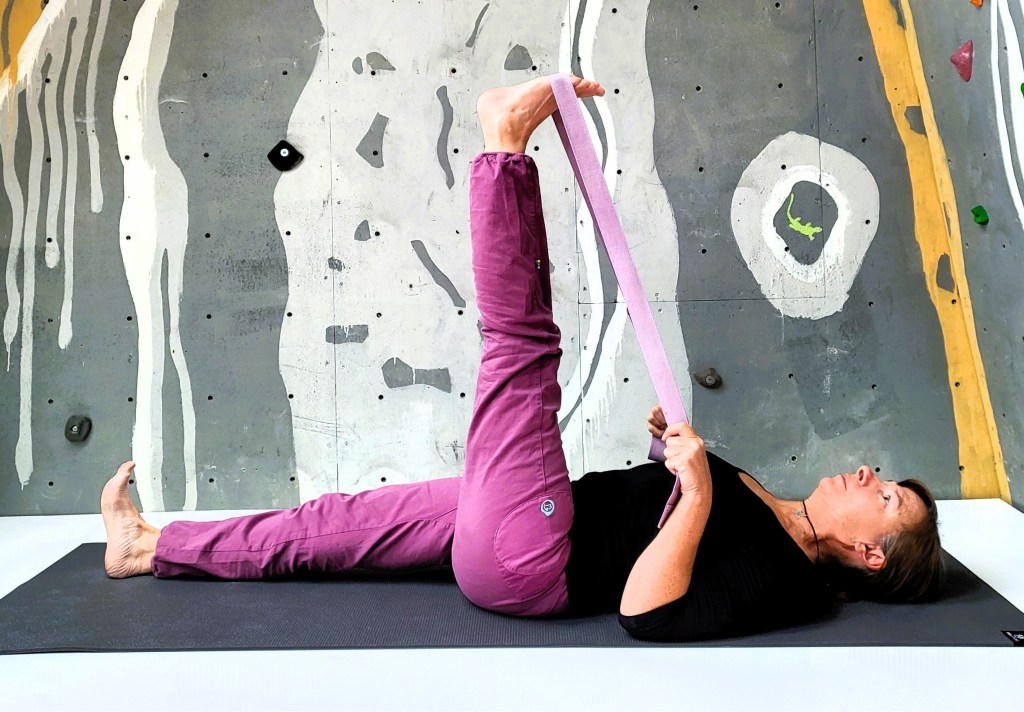
This the safest way to stretch the hamstrings as the back is fully supported.
5 or 6 slow steady breaths each side.
Inhale: Stretch through heel of raised leg
Exhale: Pull knee closer to chest
Forward Fold pose with block
Uttanasana variation
| Needs care! ⚠ |

All though this pose is very commonly practiced, it needs great care to protect the back*.
Place hands on a block or chair to keep back as straight as possible, and bend knees if necessary – you will still feel a stretch in your hamstrings!
5 or 6 slow steady breaths.
Inhale: Lengthen and straighten back
Exhale: Deepen flexion in hips to hinge downwards.
*Avoid if you have back pain or osteoporosis.
Downward Dog pose
Adho Mukha Svanasana
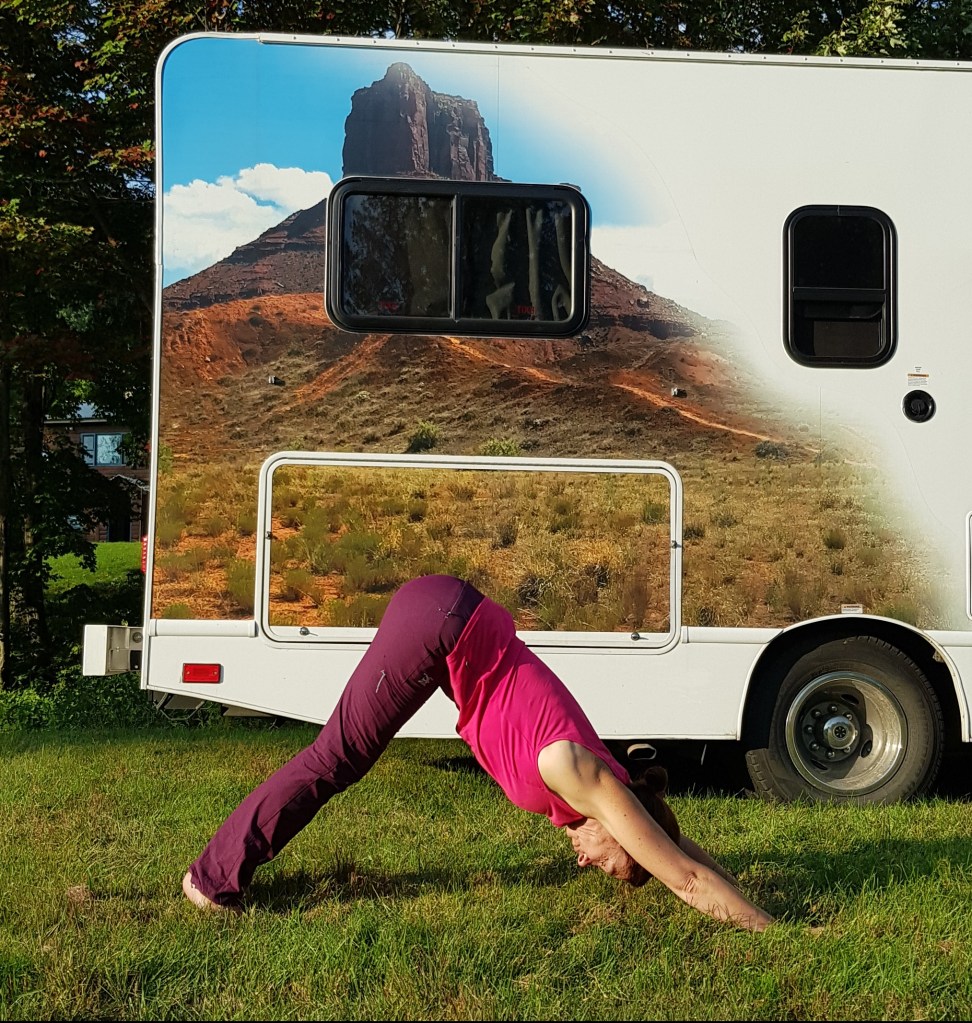
Stretches hamstrings (and calves).
5 or 6 slow steady breaths.
Inhale: Lengthen trunk to lift hips
Exhale: Stretch heels towards the mat (it doesn’t matter if they don’t get there!)
Bridging Wide – poses for opening hips
Bridging can be a secret superpower allowing those with flexible hips to offset limited upper body strength even on steep rock!
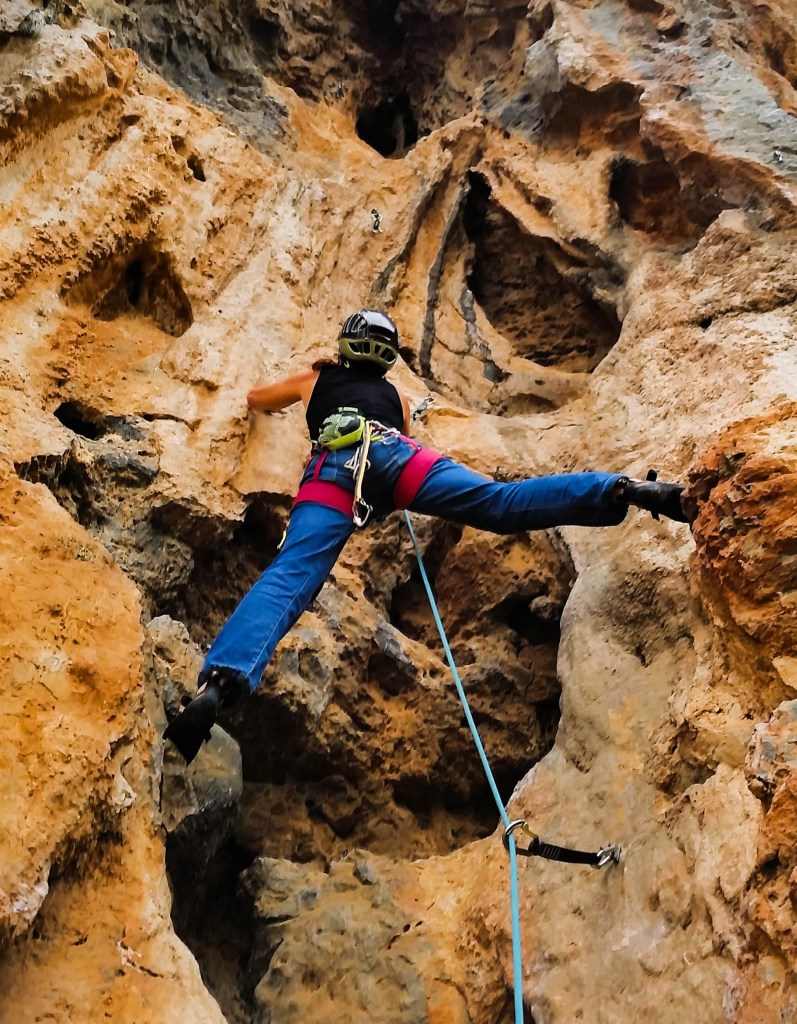
Wide bridging requires flexibility in the groin and hip adductors (the muscles on the inside of the thigh).
Many stretches for the adductors also help with external rotation of the hips, another crucial aspect of flexibility for climbers – see next section.
Wide-legged Forward Fold pose
Prasarita Padottanasana
| Needs care! ⚠ |

Needs care to protect the back*. If necessary place hands on a block or chair to keep back as straight as possible!
5 or 6 slow steady breaths.
Inhale: Lengthen and straighten back
Exhale: Deepen flexion in hips to hinge downwards.
*Avoid if you have back pain or osteoporosis.
Cobblers pose
Baddha Konasana
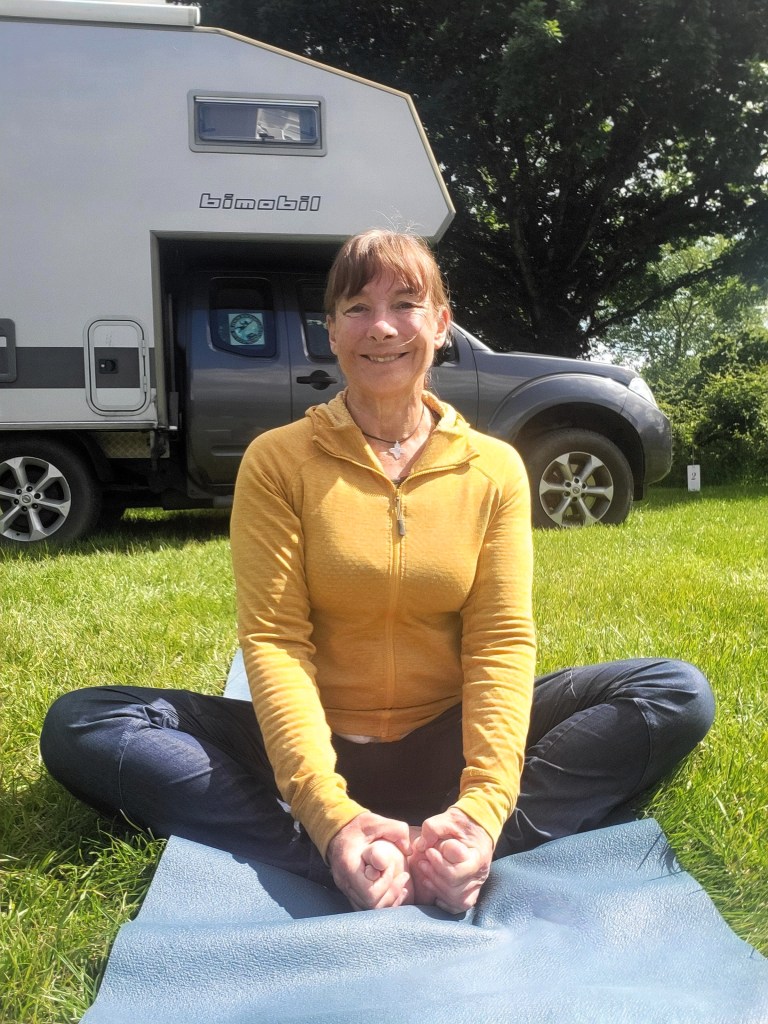
One of my favourite poses, deep, mindful and controlled.
Bring feet as near to groin as comfortable.
5 or 6 slow steady breaths. Let gravity pull knees downwards to help open groin.
Inhale: Lengthen and straighten back.
Exhale: Lean straight torso gently forward to deepen the stretch in the groin.
Garland pose
Malasana
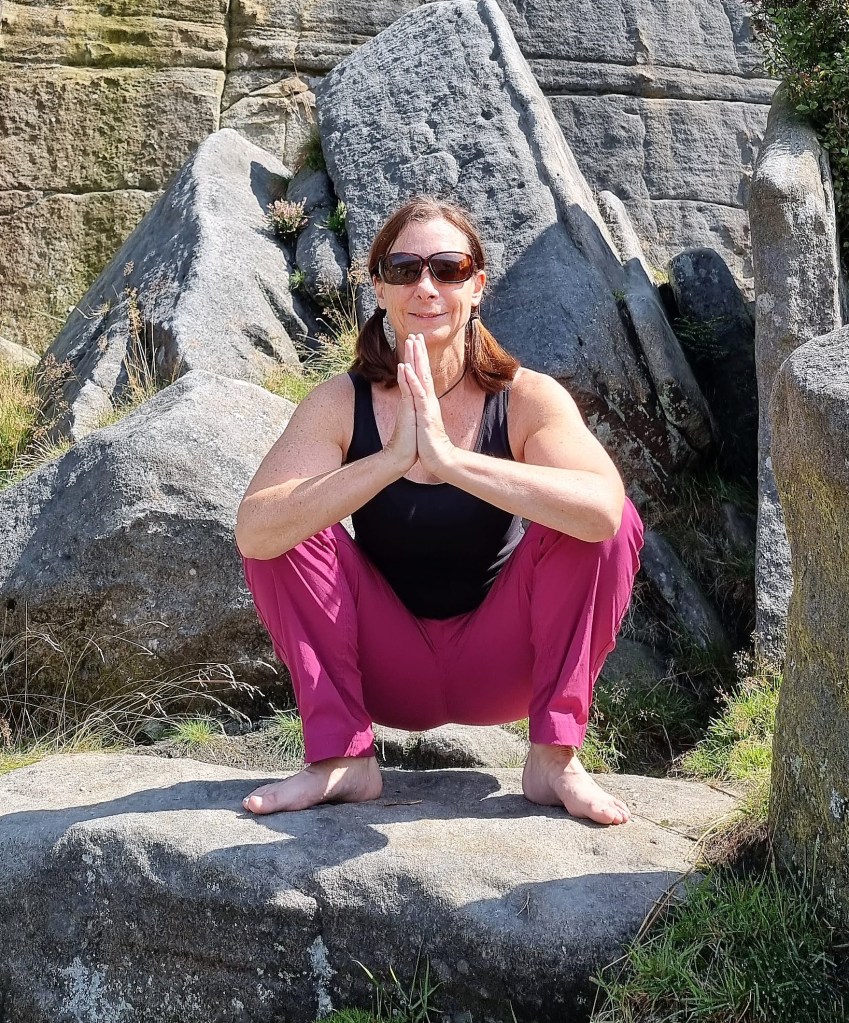

Garland Pose involves deep flexion in the hips and knees as well well as opening the groin. This can make it challenging, but there are lots of variations to make it more accessible. (See also my earlier article about why this pose is particularly important for women outdoors.)
Find the variation that works for you and hold for at least 5 or 6 slow steady breaths.
Keeping Close to the Rock – poses for hip rotation
The ability to rotate a flexed hip out to the side can be a game-changer when climbing.
You can keep your centre of gravity close to the rock, taking strain off the arms and allowing more opportunities for rest.

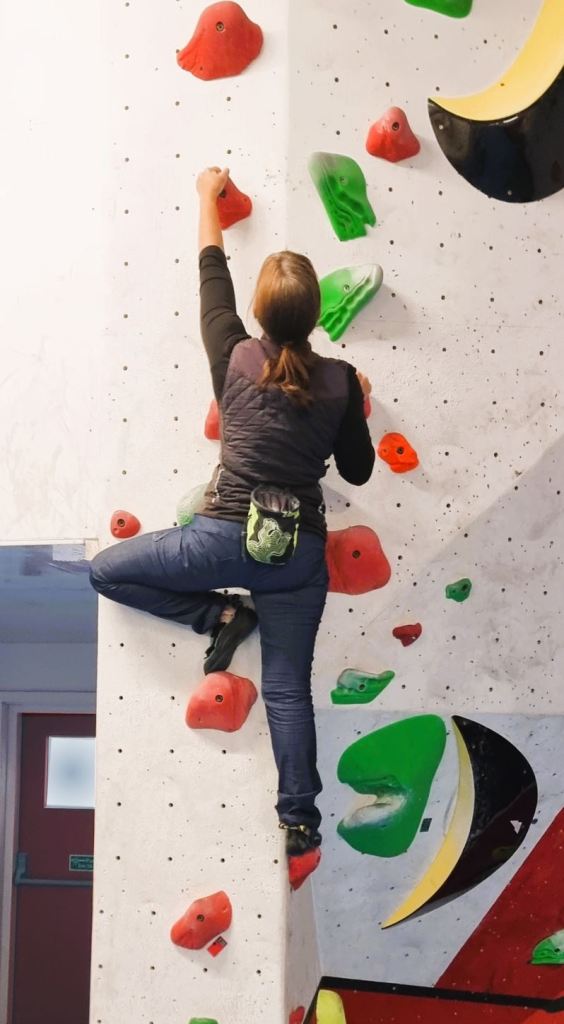
And awkwardly placed holds become available to you – for example, a toe jam near your groin when crack climbing.
Reclining Pigeon pose
Supta Ardha Kapotasana
| Good for beginners! 😊 |
A great stretch for gluteus and piriformis.
Start lying on your back with feet on the floor and knees raised. Cross right ankle over left thigh. If you don’t feel a stretch in right hip, try gently pulling left hip towards with hands (or strap if needed).
Hold for 5 or 6 slow steady breaths.
Repeat on other side.
Pigeon pose flow
Ardha Kapotasana flow
| For more experienced yogis 🙏 |
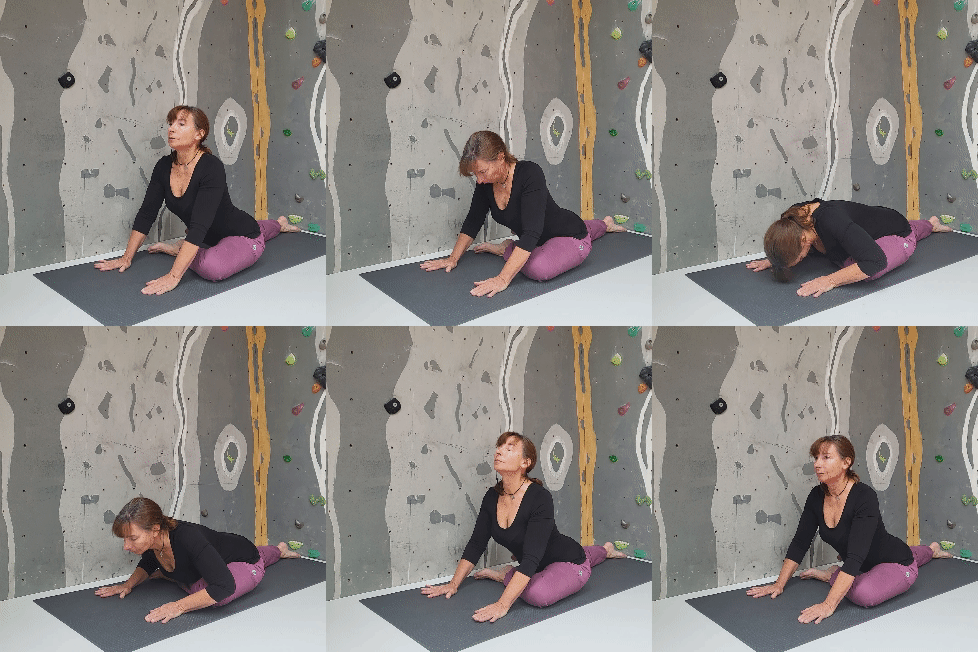
Right shin crossed in front of groin, left leg stretches behind.
Inhale: lift and extend the trunk
Exhale: lower the trunk
There should be no pain in either hip, so if this pose is too intense, try the more accessible reclining version.
Protecting Knees and Back: poses to release hip flexors
If you spend a lot of time sitting (whether at a desk or in a driving seat), it’s likely that your hip flexors are shortened and tight.
The hip flexor muscles include the iliacus, psoas and rectus femoris muscles. These muscles span your front hip creases, and work to flex the thigh forward. Sitting for prolonged periods maintains them in a shortened position, leading to tightness.
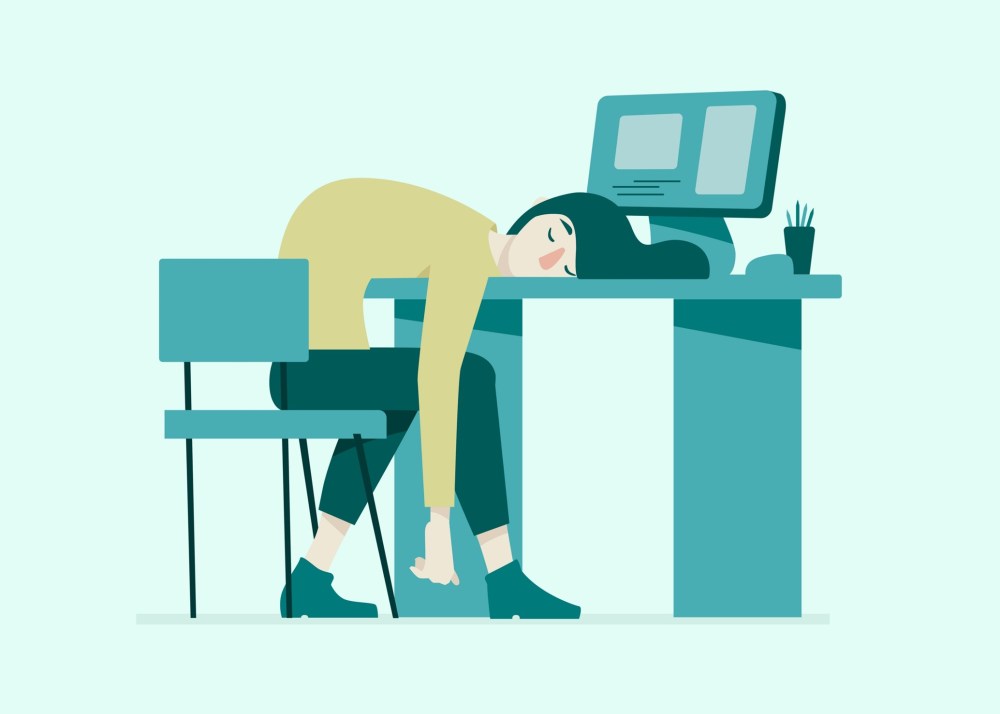
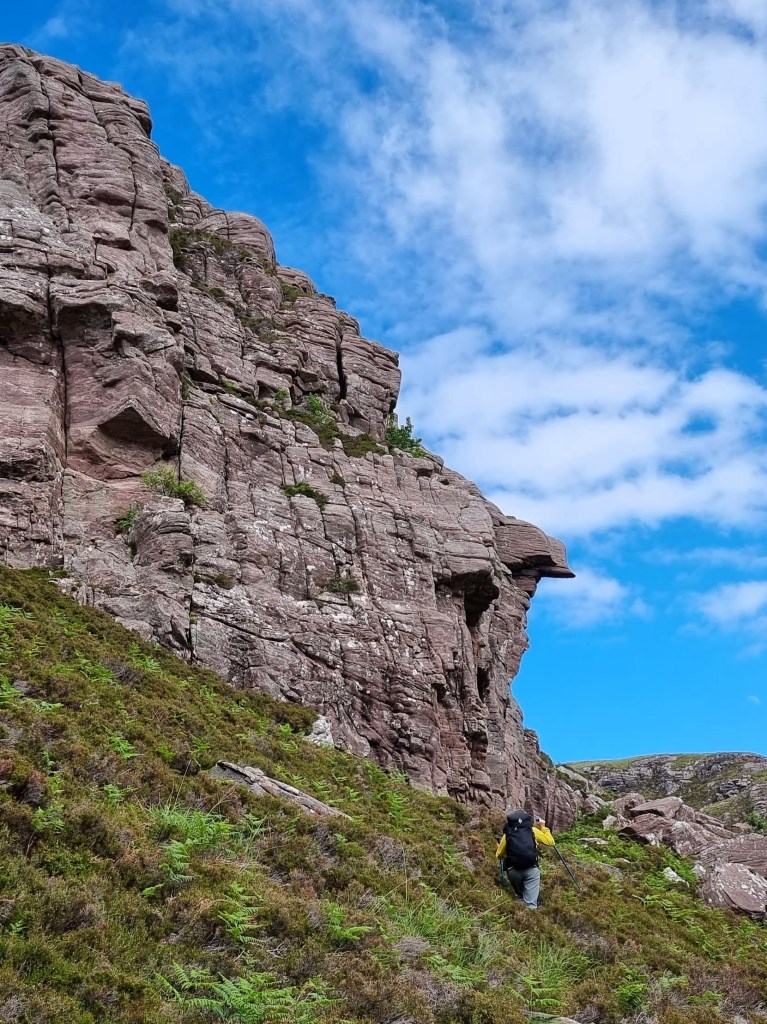
While you may not directly notice problems from tight hip flexors while climbing, the inbalance between the hip flexors and the gluteus muscles can affect your posture, leading to lower back problems.
The inbalance is also a common cause of knee pain due to misalignment, particularly on steep or rough crag approaches and descents.
Releasing the hip flexors (and strengthening the glutes if needed) keeps your back healthier and can relieve knee problems.
Crescent Lunge pose with block
Anjaneyasana variation
| Good for beginners! 😊 |
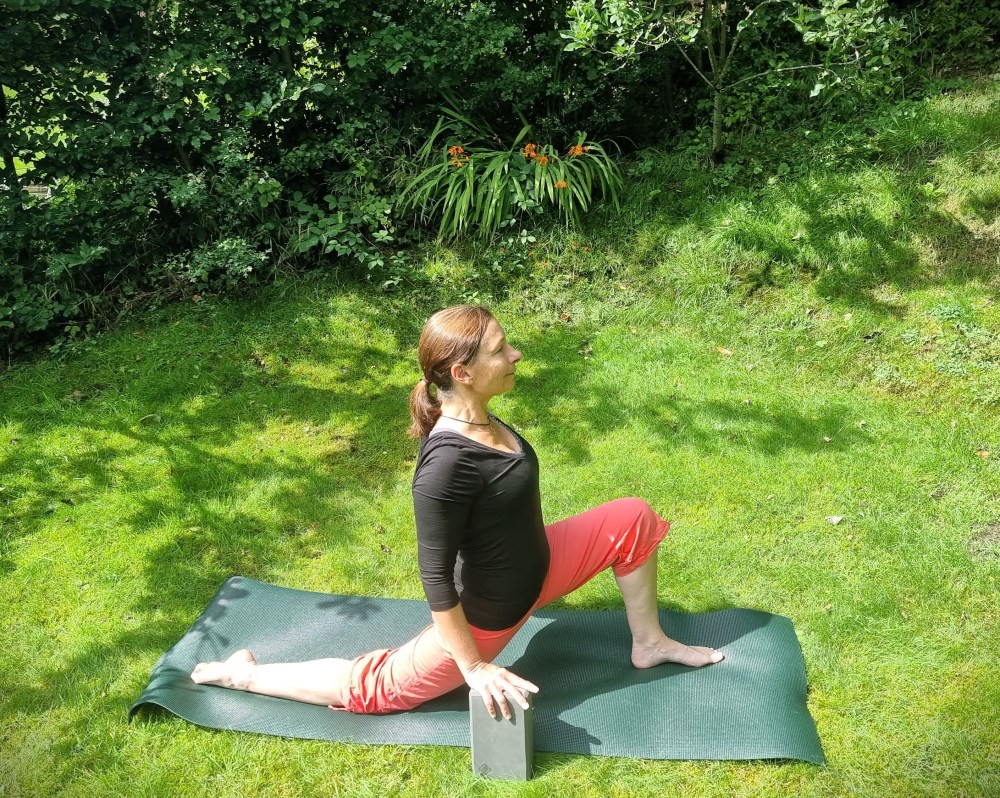
Using blocks gives space to tilt pelvis and open chest without strain on front knee.
Squeeze glutes in back hip (antagonistic muscles which help release hip flexor).
5 to 6 slow steady breaths each side.
Inhale: lift chest
Exhale: tilt bottom of pelvis forward and engage glutes to deepen stretch
Dancers pose variation
Natarajasana variation
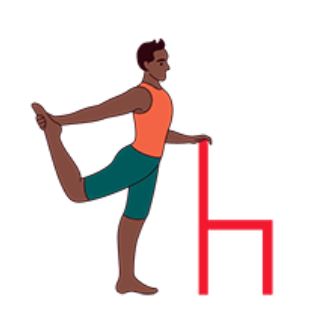
Full Dancers pose (as featured on the site logo) is quite demanding, but this variation is much more accessible.
5 to 6 slow steady breaths each side.
Inhale: Push foot into hand to engage glute and open shoulder.
Exhale: Use hand to pull thigh backwards
As this gets easier you can gradually build towards full Dancers pose.
Twisted Lizard (Dragon) pose
Parivrtta Utthan Pristhasana
| For more experienced yogis 🙏 |
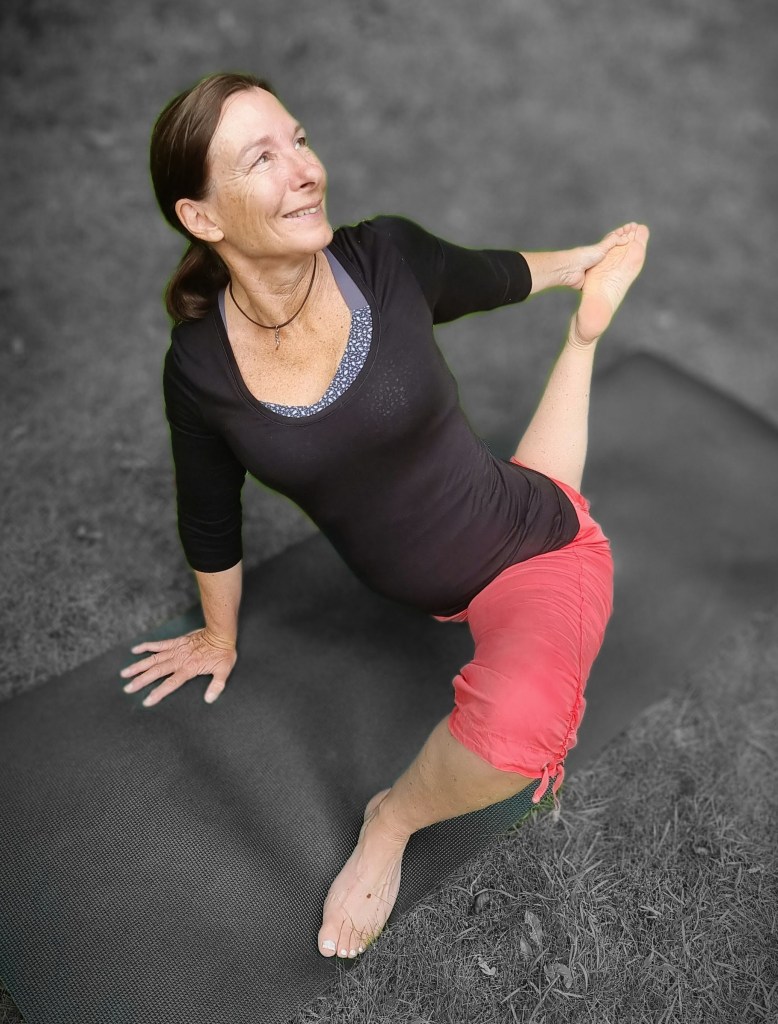
Another of my favorite poses, giving a chest and shoulder opener as well as a strong stretch in back hip flexor.
5 to 6 slow steady breaths each side.
Inhale: Push back foot into hand to open shoulder and lift chest.
Exhale: sink deeper into pose
Note: this is a challenging pose. If you can’t reach to bind with back foot, just leave foot on ground or do the more accessible Crescent Lunge.
DISCLAIMER: ALL ACTIVITIES DESCRIBED ON THIS WEBSITE ARE FOR GENERAL INFORMATION ONLY AND MAY NOT BE SUITABLE FOR EVERYONE. ALL EXERCISE CARRIES A SMALL RISK. ANYONE TRYING ANY OF THE ACTIVITIES DESCRIBED ON THIS WEBSITE ACCEPTS THIS RISK AND THE AUTHOR DISCLAIMS ANY LIABILITY FOR ANY ADVERSE EFFECTS CONNECTED WITH THESE ACTIVITIES.
References and notes
- For example, Forward Fold (Uttanasana), Downward Dog (Adho Mukha Svanasana) and Reclining Hamstring Stretch (Supta Padangushthasana) all stretch the hamstrings. ↩︎
- Because developmental stretching does not lengthen muscle in the long-term, it does not permanently reduce a muscle’s ability to contract. In fact, it can enhance it’s effectiveness by allowing it to contract over a greater range. ↩︎
 Vertical Yoga